
Announcement
From Experiment to Institute
The Next Chapter of Ethos

Richard H. Friedman, Founder
The first Ethos was held in Miami in 2017. It was not called Ethos then. It was an experiment. Over decades of studying trials and trial lawyers I became convinced that trial lawyers were often getting in the way of their own excellence. Not because they weren’t using the proper techniques, but because their own “baggage” was tripping them up.
Many CLEs dealt with crafting the right message. Many dealt with how to get the right audience and help them be open to the message. But no one was really talking much about the messenger. Yet the messenger was often having trouble delivering the well-crafted, well-thought-out message. Why? The reasons varied with each person. There was not a one-size-fits-all answer. Perhaps that was why no one was trying to address the issue directly.
Those who attended the Miami 2017 session spontaneously started their own list serve, stayed in touch with each other and asked for more. Since that time I have tried to have at least one Ethos per year—and have failed. I think we have had six other full sessions, and two abbreviated sessions. COVID and my trial schedule have prevented me from doing more. But judging from the number of requests I receive, we could probably hold four to five Ethos sessions per year. But I don’t have the administrative or management skills to make that work.
How Leigh Came to Ethos
An Easy Choice
Over the years of working with the evolving experiment that is Ethos, I came to know Leigh Johnson, one of the most talented lawyers I have ever met. As far as I can tell, Leigh is good at everything: trials, teaching, psychodrama, writing, jury consulting and management and administration. It became clear to me that if Ethos was to grow to help more people, someone like Leigh would have to take it to the next level—and I cannot think of anyone better suited to that job than Leigh. In addition to her remarkable skills and intellect, she has a deep, generous heart and the ability to connect and work with just about anyone.
So I asked her… and she said yes.
The Transition
Sending a Kid Off to College
We are going to jointly put together the next few Ethos sessions, after which she will become President of Ethos and be fully in charge (along with the board) of developing this program into a true “institute.” I will continue to be deeply involved with every program, and plan to attend and participate in every program.
To me, this transition feels like sending a kid off to college:
I have done what I can, and I will continue to support and participate in your growth and your life, but other influences need to shape you now. For Ethos, the primary influence will now be Leigh.
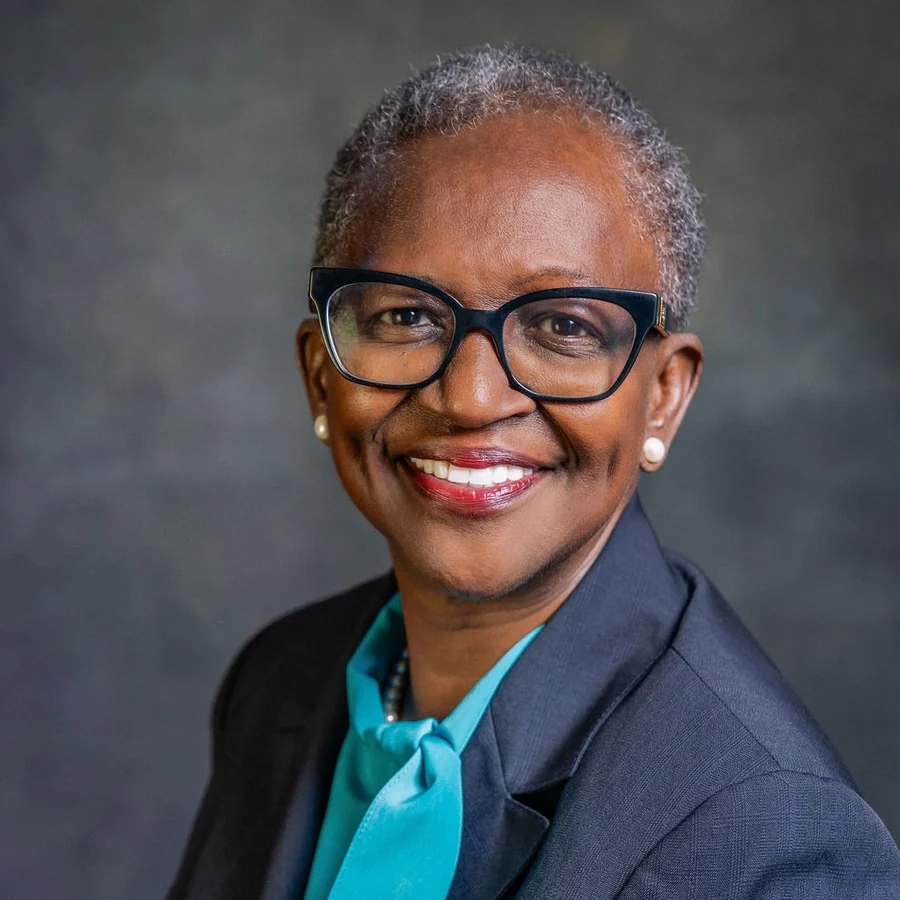
Leigh E. Johnson, President
What This Next Chapter Means to Me
Rick’s announcement carries great meaning for me because Ethos has never felt like any other trial program. At its core, Ethos asks a question legal education too often leaves untouched: what happens when we stop focusing only on the message and the audience and begin looking seriously at the messenger?
Through my work, I have kept returning to the same underlying inquiry: what allows an advocate to remain fully available to the work when the stakes are high? That inquiry matters because lawyers spend years learning doctrine, strategy, persuasion, examination, and argument, yet all of it must ultimately travel through a human being. Under pressure, our history, habits, fears, roles, and ways of relating enter the work with us.
For that reason, Ethos should be more than a place where lawyers gather to learn. It should be a place where ideas deepen, disciplines meet, faculty contribute to a shared body of work, and lawyers can continue developing long after a program ends. It should have rigor, continuity, and culture without becoming rigid.
My responsibility is not simply to preserve what Rick created, nor to reinvent it for the sake of change.
It is to understand what gives Ethos its identity, protect what should not be lost, and help the work evolve.
Building the Institute
What the Institute Becomes
That evolution means bringing together trial advocacy, psychodrama, story, role theory, voice, relationship, and group process in a way that remains coherent and useful. It means building an institute that develops advocates whose skill is inseparable from integrity, humanity, self-knowledge, and courage.
Rick’s continuing involvement is essential to that future. His question about the messenger gave Ethos its foundation, and I expect we will continue to question, experiment, revise, and learn together as the Institute grows.
That makes the challenge ahead one of stewardship: to build structure without letting structure become the work; to grow without diluting; to professionalize without losing humanity; and to expand without forgetting why Ethos mattered in the first place.
That is the work I said yes to.
I am grateful for Rick’s trust, for the people who have already shaped Ethos, and for those who will join us next.
Because the work still begins where it began in 2017—with the messenger, with the person carrying the story, with the advocate standing in the room.
The experiment continues, as an institute.