
About Ethos
Advocacy Begins With the Advocate
Long before advocacy became a profession, Aristotle identified ethos as one of the essential forces of persuasion: the character and credibility of the person speaking. More than two thousand years later, that insight remains.
Ethos Origin Story
How It All Began…
After decades of watching trial lawyers succeed and fail, Rick Friedman became convinced that traditional CLEs were overlooking a major dynamic at work in trial—the character and emotional makeup of the trial lawyer.
At Spence’s trial college Rick had seen how psychodrama can at times be useful in addressing obstacles to a lawyer’s optimal performance. He saw something powerful in the work and became interested in taking the inquiry further.
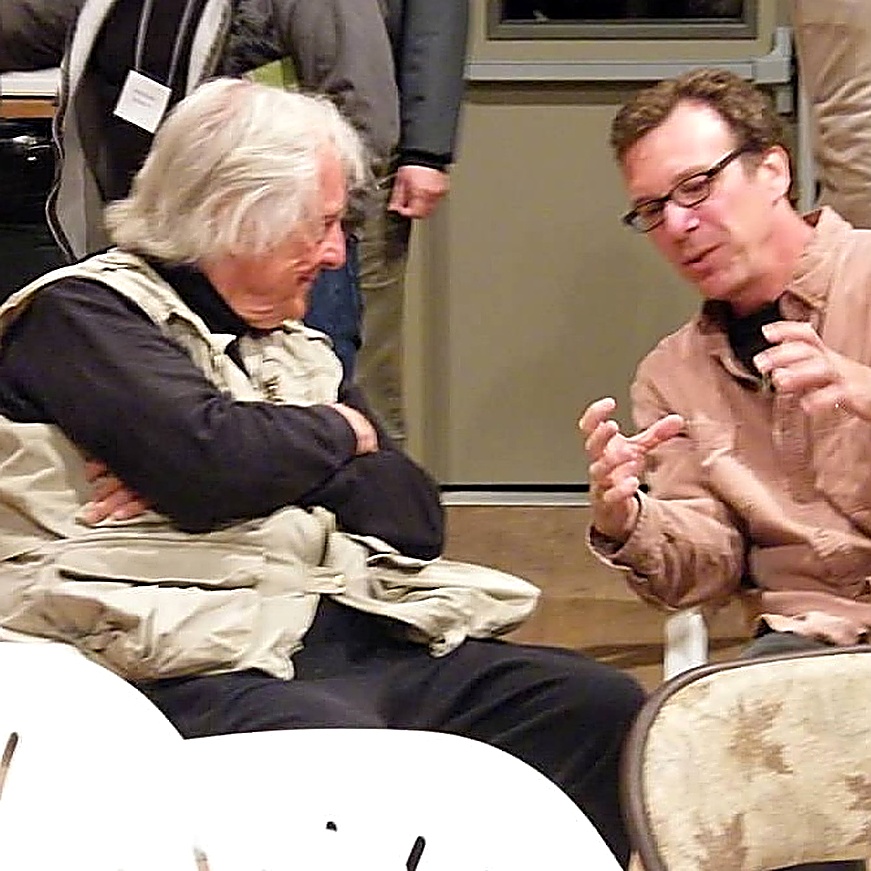
Rick Friedman and Gerry Spence, in conversation
In 2017 he decided to conduct an experiment with this announcement:
This is truly an experimental program. Over the years, I have watched plaintiff lawyers (including myself) struggle with issues such as stress, when to go to trial and when to settle, how to handle losses, how to balance their own financial interests with those of their clients, and a myriad of similar issues. I have also seen them struggle with trial issues such as how much preparation is enough, how to be comfortable in the courtroom, or how to handle bullying judges and unethical opposing counsel. Collectively, I have come to think of these issues as “wrestling with our demons.” In fact, that should probably be the title of this seminar. If we don’t do a good job handling our demons—and most of us don’t—then we are devoting energy to them, instead of devoting it to winning our cases.
My observation has been that our demons sap our strength, resilience and resolve. They defeat us at least as often as our opponents.
I have designed this program to help you, me, and 39 of our closest friends come to better terms with our demons. I have no idea if this will work. My commitment to you is that I will do everything I can think of to make it work.
The first program was held in Miami in May of 2017. And it worked. The initial group of 40 lawyers asked for another workshop, and the Ethos Advocacy Institute was created as a nonprofit to continue the experiment. Over the following years, six more programs were held in Bremerton, Washington. Rick and his fellow “guides” continued to refine the techniques for helping people become better trial lawyers through a variety of unconventional exercises and presentations.
Having completed eight years of intense litigation against Monsanto, Rick is now ready to expand Ethos. He asked Leigh Johnson for help in expanding the program to different locations, and broadening the topics addressed at the workshops. As the program expands, she has agreed to become the next president of the Ethos Advocacy Institute.
The experiment continues. Our mission is to continue to help lawyers become better advocates, and happier, more satisfied advocates. We will continue to use the methods which have worked so well thus far. We will also continue to look for new experiential methods to assist trial lawyers in their personal growth as advocates and as people.

The Advocate and the Advocacy
What We Believe
Ethos begins with a proposition that sounds simple but has profound consequences: the lawyer is part of the advocacy.
Who we are enters the courtroom with us.
Our preparation enters. So does our fear. Our courage. Our need for control. Our relationship with conflict. Our response to authority. Our ability to tolerate uncertainty. Our capacity to listen. Our willingness to be wrong. Our resilience after failure. Our comfort with power. Our understanding of responsibility. Our ability to remain present when the moment does not unfold as planned.
These things are not separate from trial skills. They affect how those skills become available when we need them.
A lawyer can know how to listen without being able to listen when an answer threatens the case. A lawyer can understand courtroom presence and still disappear when confronted by an intimidating judge. A lawyer can know that preparation should create freedom and instead become imprisoned by the script. A lawyer can understand that authenticity matters and become performative the moment the jury enters the room.
That is why Ethos does not separate the development of the advocate from the development of advocacy.
We believe lawyers learn differently when they move from understanding an idea to experiencing it. We believe action reveals things analysis alone cannot. We believe meaningful professional growth sometimes requires us to examine not simply what we do, but who we become while doing it.
That is why Ethos is experiential.
We work through action, encounter, storytelling, psychodrama, performance, reflection, group experience, and other methods that allow lawyers to test what they know against what actually happens when they must use it.
We do not seek to manufacture one model of the ideal trial lawyer. There isn’t one.
We seek to help advocates discover more of their own range: greater freedom of action, greater awareness, greater resilience, greater skill, greater humanity, and greater capacity to serve the people who have entrusted them with something important.
From Miami to a National Institute
What Ethos Has Become
What began with 40 lawyers in Miami has become a community built around a different approach to the development of advocates.
Ethos remains intentionally different from traditional legal education. Our programs are not built around accumulating information or sitting through a succession of lectures. Information matters. Technique matters. Legal knowledge matters. But Ethos is interested in the distance between knowing something and being able to live it when the pressure is real.
That work now takes several forms.
Ethos Foundations is the core Ethos experience. It introduces participants to the fundamental inquiry that has animated Ethos from the beginning: how the character, emotional makeup, habits, strengths, pressures, relationships, and lived experience of the lawyer affect advocacy. Participants work experientially to discover what strengthens their effectiveness, what interferes with it, and how more of their capacity can become available in their work.
Ethos Advanced allows lawyers who share that foundation to go deeper. It explores the continuing development of the advocate across a professional life—the challenges that come with experience, leadership, success, failure, responsibility, change, and the evolving demands of representing other human beings. Advanced work is not simply “more difficult” Foundations work. It asks what becomes possible once lawyers have developed the shared language and experience necessary to explore more deeply.
Ethos Specialty Programs concentrate the Ethos approach on a particular skill set or a specialized group of advocates. A program may focus intensively on an area of advocacy or be designed around the distinctive work and challenges of a particular group. The subject changes. The Ethos method does not. Specialty Programs remain experiential because a skill is not fully learned until it becomes available to the human being who must use it.
Across all three, the original experiment remains recognizable. We gather excellent lawyers and ask them to work differently. Not simply to learn more. To discover more.
The Experiment Continues
Where We Are Going
Ethos is entering a period of expansion, but expansion does not mean abandoning what made the original experiment work. It means taking the experiment seriously enough to continue it.
We are bringing Ethos to new locations. We are broadening the subjects we explore. We are developing Foundations, Advanced, and Specialty Programs that allow us to serve lawyers at different points in their professional development and to examine particular dimensions of advocacy more deeply.
We are also continuing to search.
The methods that have worked will remain part of Ethos. Psychodrama and other experiential approaches will continue to have an important place in our work. But Ethos has never been built around allegiance to a single method. The commitment is to the purpose.
If another experiential method can help an advocate see something that was previously invisible, we want to explore it.
If a different discipline can teach us something important about courage, story, relationship, leadership, creativity, resilience, performance, judgment, or human behavior, we want to encounter it. If an exercise fails, we want to learn from it. If something works, we want to understand why. That spirit of experimentation is not a departure from the original Ethos. It is the original Ethos.
In 2017, Rick Friedman invited 40 lawyers into a room without knowing exactly what would happen. What he knew was that trial lawyers needed something traditional legal education was not giving them.
The years since have answered part of that question. Now we get to ask the next ones.
Ethos will continue developing advocates whose integrity, humanity, and skill illuminate truth and elevate the practice of law. We will continue creating places where accomplished lawyers can experiment, take risks, examine themselves, learn from one another, and expand what they are capable of doing for the people they represent.
We will continue to care about excellent advocacy. And we will continue to care about the human being who must sustain a life while practicing it.
The experiment continues.
We Develop the Advocate, Not Merely the Advocacy
Who Must the Lawyer Be Capable of Becoming?
Traditional legal education concentrates on what the lawyer must know. Trial training often concentrates on what the lawyer must do. Ethos adds another question: who must the lawyer be capable of becoming when the moment demands it?
A prepared advocate. A listener. A storyteller. A strategist. A challenger. A guide. Sometimes the advocate who speaks—sometimes the one with the discipline not to speak yet.
Mastery is not the possession of a single successful style. It is enough range to respond authentically to the people and circumstances actually present. That is why Ethos does not attempt to manufacture one kind of trial lawyer.
We help advocates develop greater range within their own.
Truth Must Be Discovered Before It Can Be Illuminated
Illumination Is Seeing More

We chose the language of illumination deliberately. The advocate’s work is not simply to make an argument brighter—it is to see more.
Every case contains competing perspectives. Clients, witnesses, opponents, and jurors may experience the same events and construct profoundly different stories about what they mean. The skilled advocate must be able to enter those perspectives without surrendering judgment, testing our own story as rigorously as we test the other side’s.
Sometimes the most important discovery in case preparation is not a better argument. It is something we had not yet learned to see. That is illumination.
Experience Changes What Information Cannot
The Classroom Becomes a Laboratory
Ethos is built around experiential learning because advocacy itself is experiential. You cannot learn to listen by reading about listening, or develop presence by studying a definition of presence. You cannot discover how you respond under pressure without experiencing pressure.
So we move learning into action. Participants work with stories, cases, witnesses, and one another. They experiment, make choices, discover what happens, receive feedback, and try again.
The classroom becomes a laboratory for advocacy. The purpose is not performance—it is discovery. What an advocate discovers through experience becomes available when the courtroom no longer follows the script.
A National Community of Advocates
More Than a Place to Attend a Program
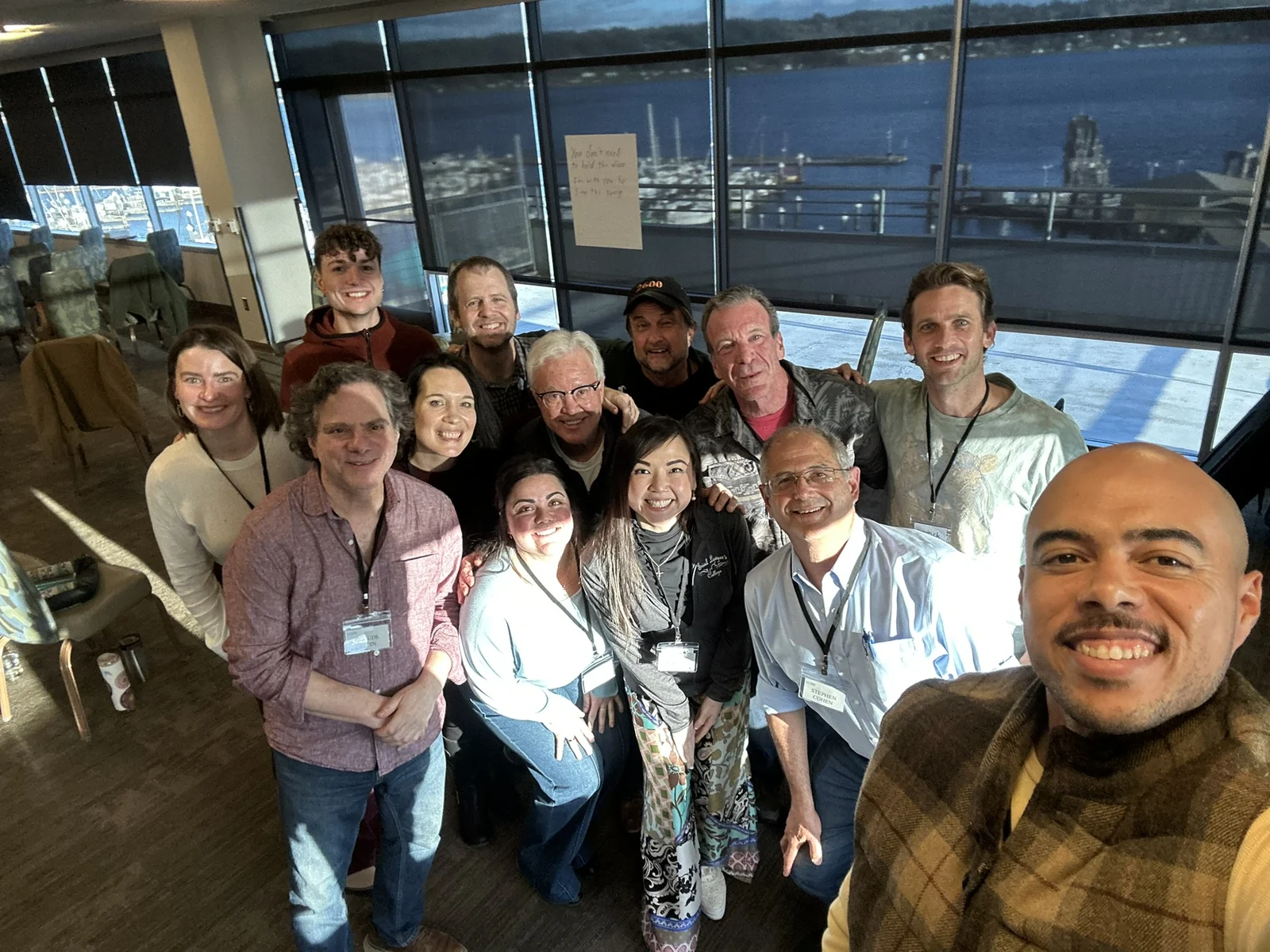
Ethos is more than a place to attend a program. We are building a national community devoted to the continuing development of advocates and the craft of advocacy.
A place where beginning lawyers learn beside accomplished trial lawyers, where experienced advocates remain students, and where disagreement sharpens thinking rather than ending conversation. Where guides enter the work rather than merely lecture about it, and lawyers can experiment, fail, reconsider, and grow before the stakes are real.
What begins in a program continues through relationships, mentorship, and service—because the strongest institutions do more than transfer knowledge. They create traditions worth carrying forward.
Our Guides
Practicing Advocates and Teachers
Ethos guides are practicing advocates and teachers selected not simply for what they have accomplished, but for what they can teach. They bring different disciplines, perspectives, methods, and experiences to the Institute. That diversity is intentional.
There is rarely only one way to try a case, tell a story, examine a witness, or reach a jury. Lawyers become stronger when they can encounter different approaches, understand why they work, and determine what is authentic and effective in their own hands.
Our guides teach from experience, but they also remain students of the craft.
Meet the GuidesMore Than a Training Program
How a Craft Survives
Ethos is being built as a continuing community of advocates. Lawyers who train together form relationships that often outlast the program itself, becoming colleagues, mentors, and friends through future programs, alumni engagement, and advanced training. Over time, some participants return not only to learn, but to teach. That is how a craft survives—one generation receives it, tests it, and passes it forward.